1.-51.
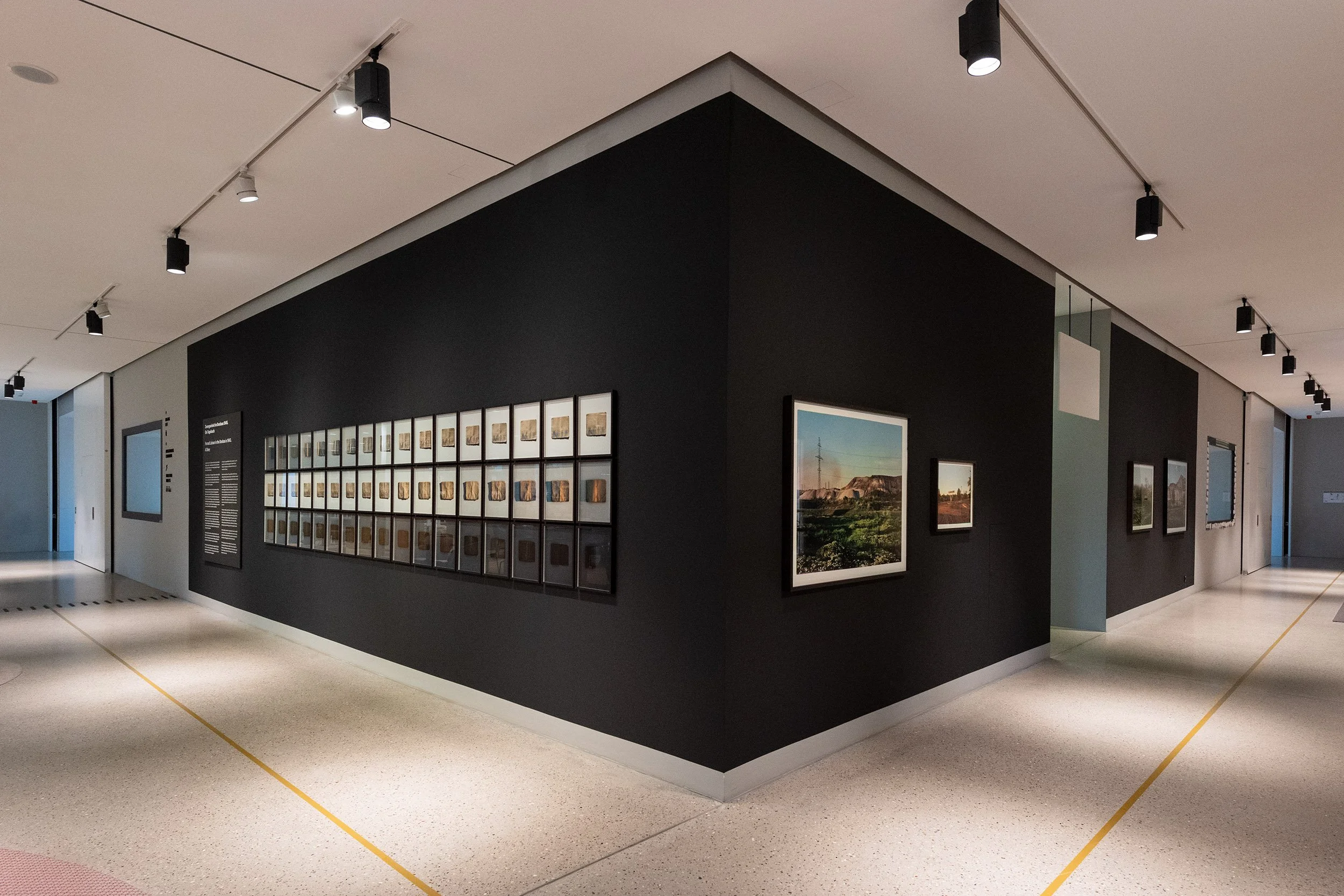
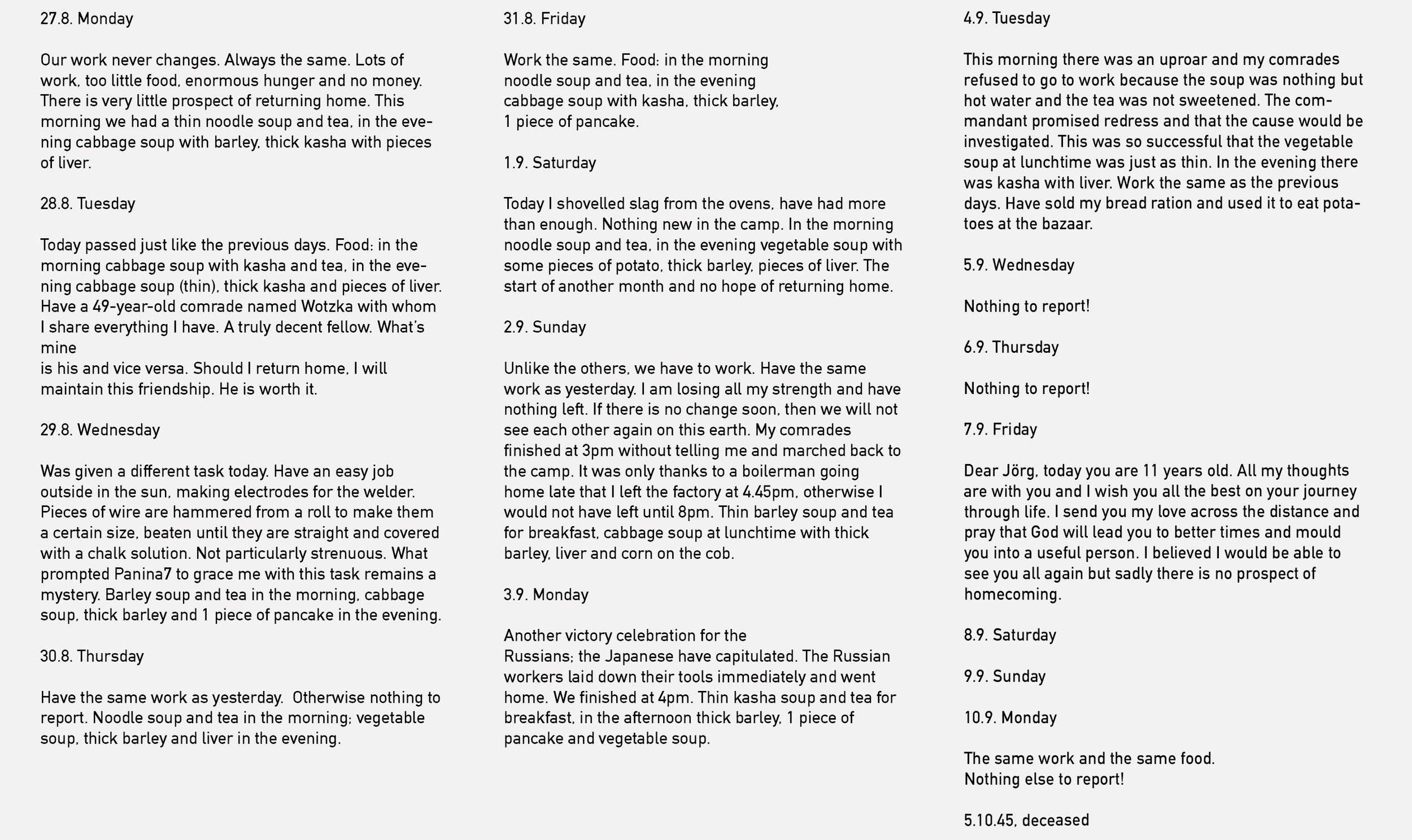
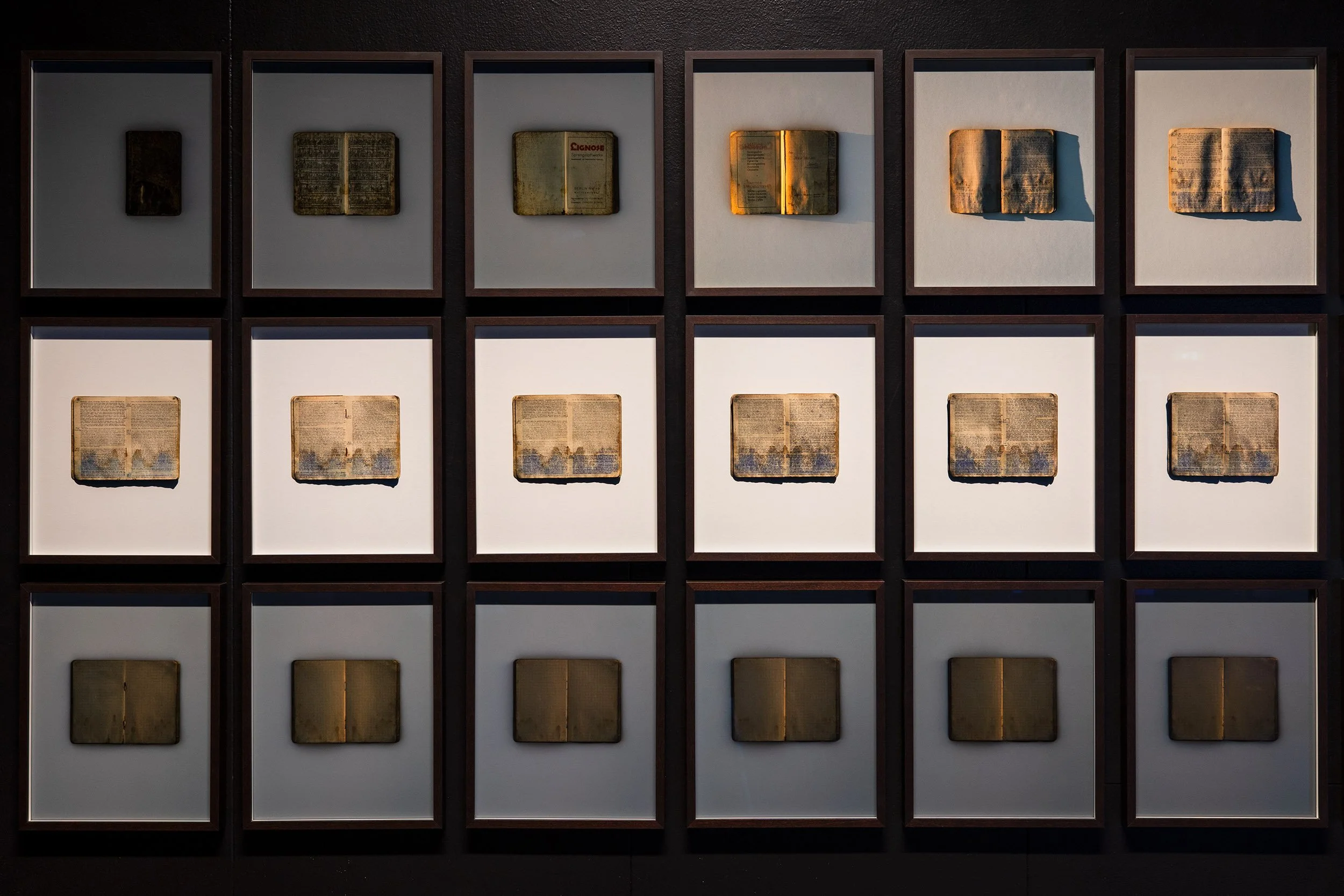
The installation centres on a diary written by Walter Heinisch during the mass deportation of Silesian civilians to forced labour in eastern Ukraine, beginning in February 1945. The first entry describes the day all men between the ages of 18 and 50 were ordered to register with the Soviet military administration following the occupation of their home city, Gleiwitz. What followed was a long journey in cattle wagons with little food, life as forced labourers alongside thousands of other civilians, and the slow erasure of any world left behind. The diary is both a private document and a record of a collective fate shared by countless families across the region.
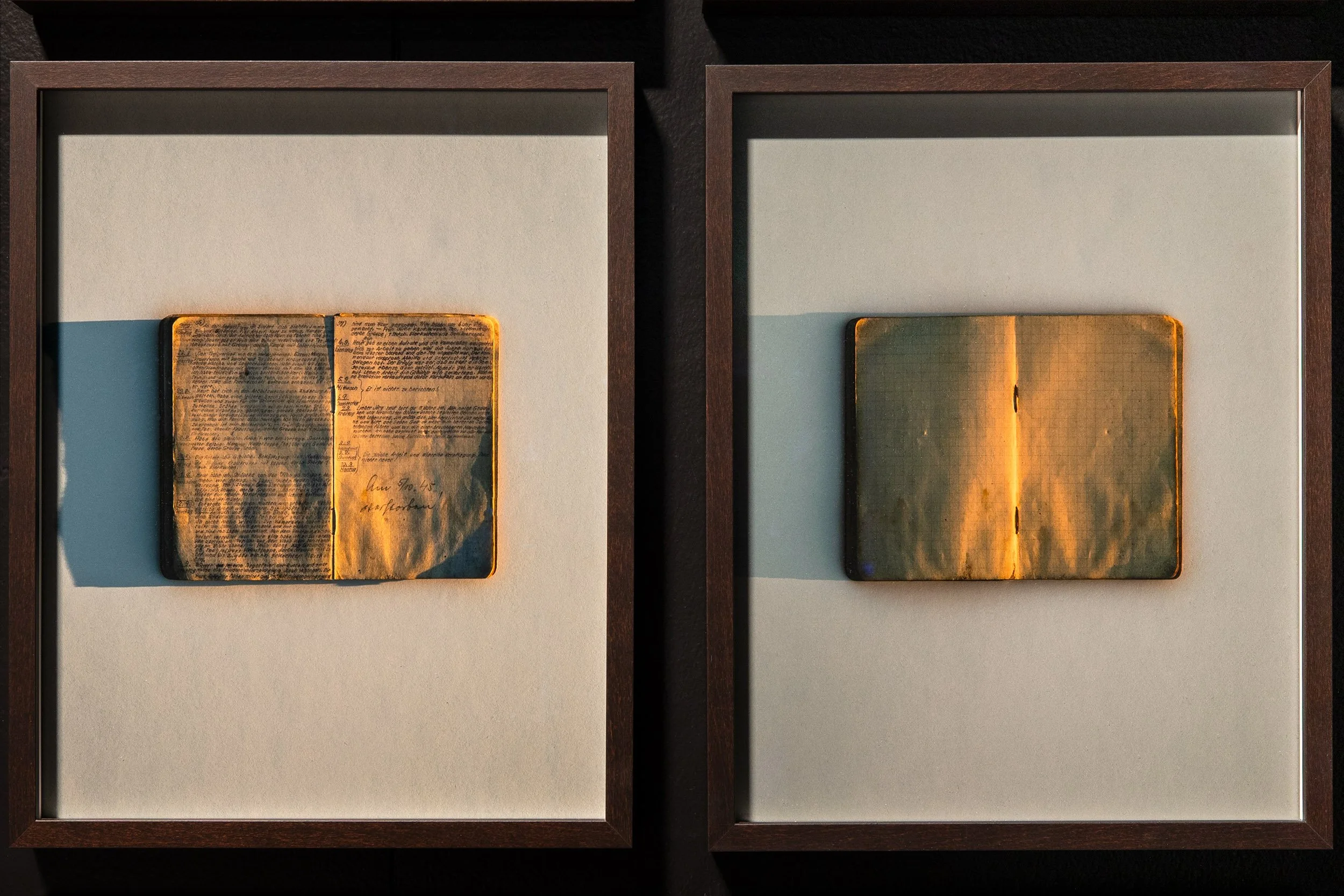
What compelled a person to record their thoughts in microscopic letters with a precious pencil under such conditions? Two pages record the deaths of fellow prisoners and an unbearable longing for family, alongside entries marking the capitulation of Germany and Japan. A failed escape attempt led to imprisonment and transfer to a new camp, where the tasks assigned were barely within the limits of human endurance. The diary ends in September 1945, weeks before the author’s death from exhaustion on 5 October. His grave is unknown. All that remains is this small almanac, carried out of the camp by a surviving fellow prisoner and delivered to his wife and four children.
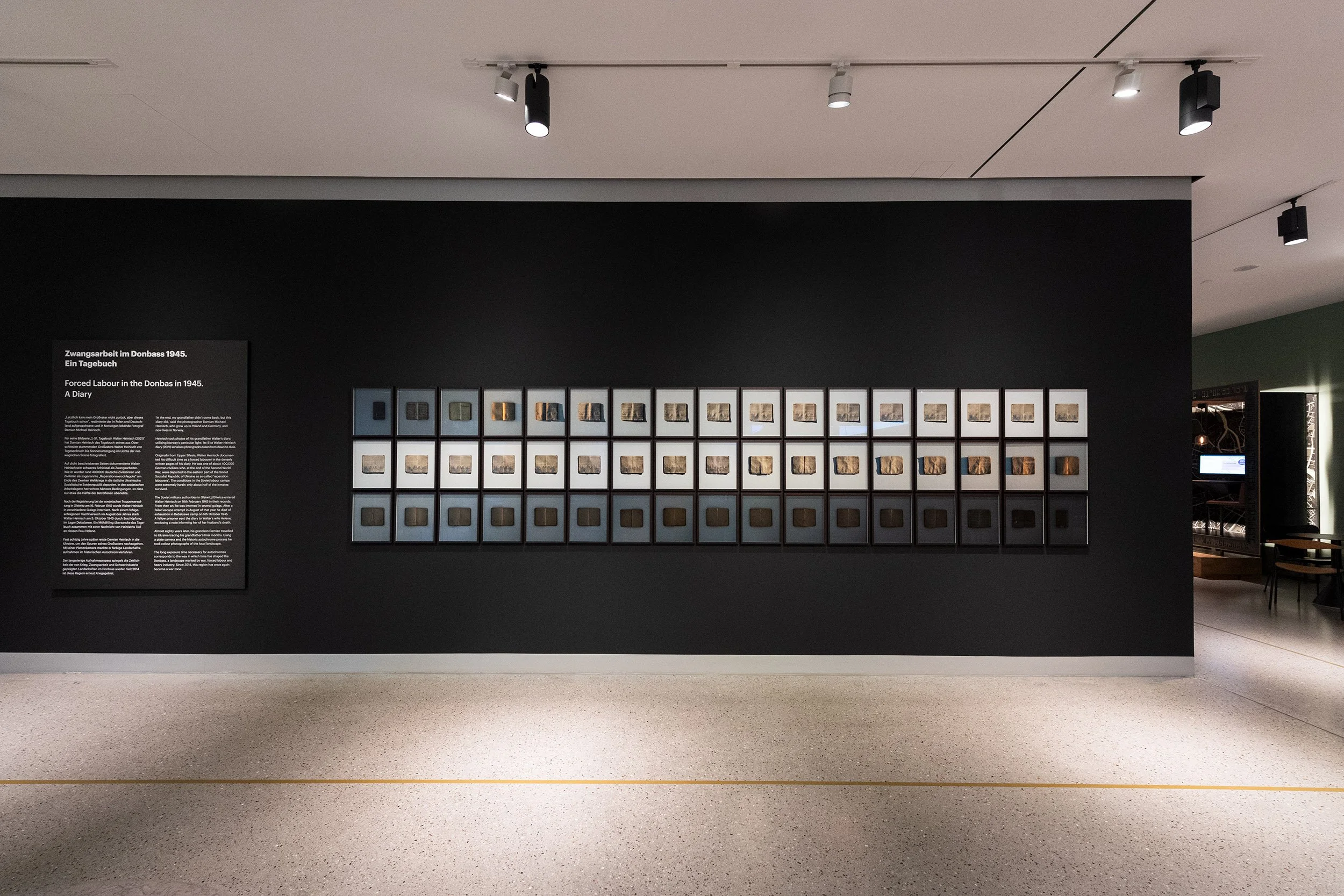
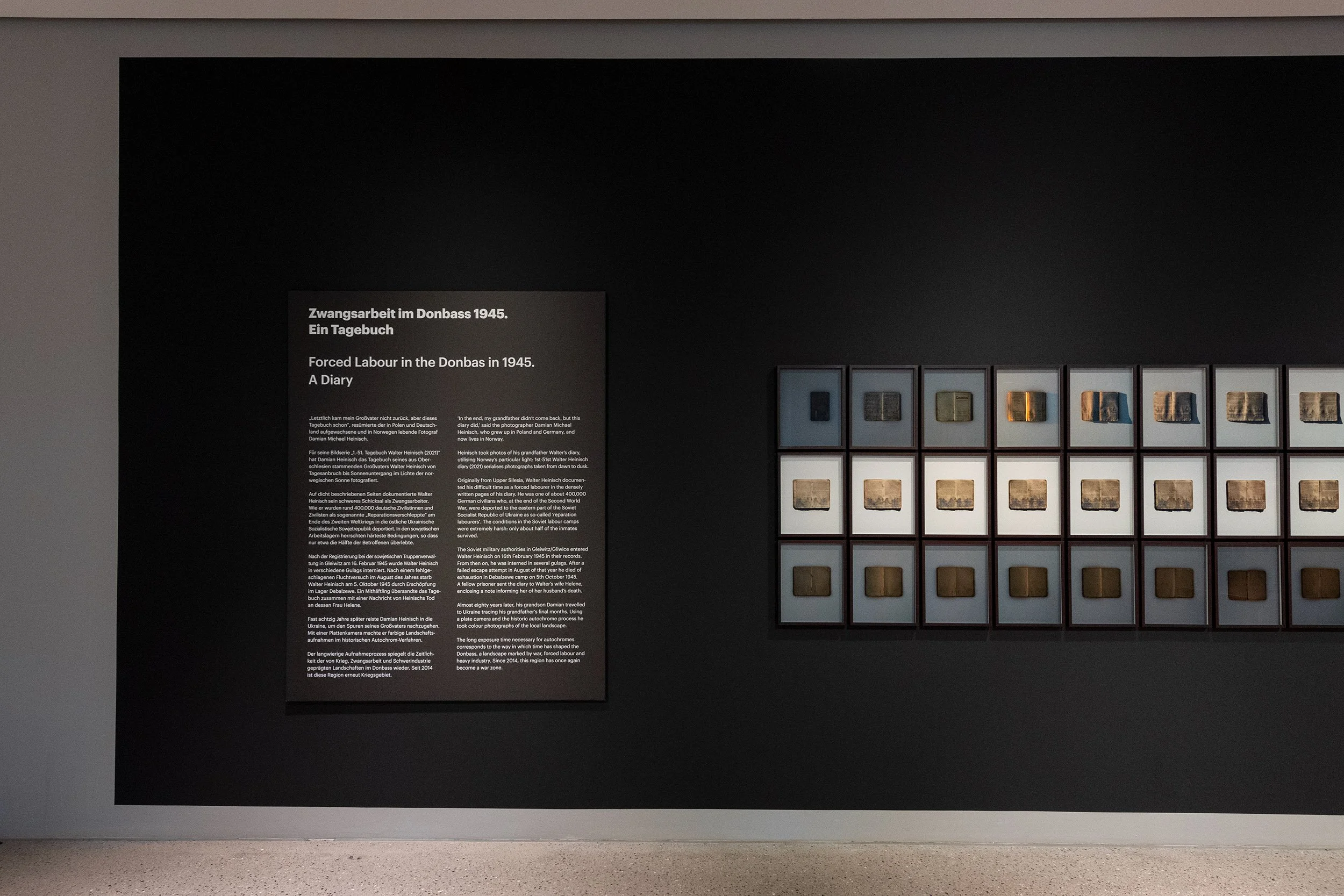
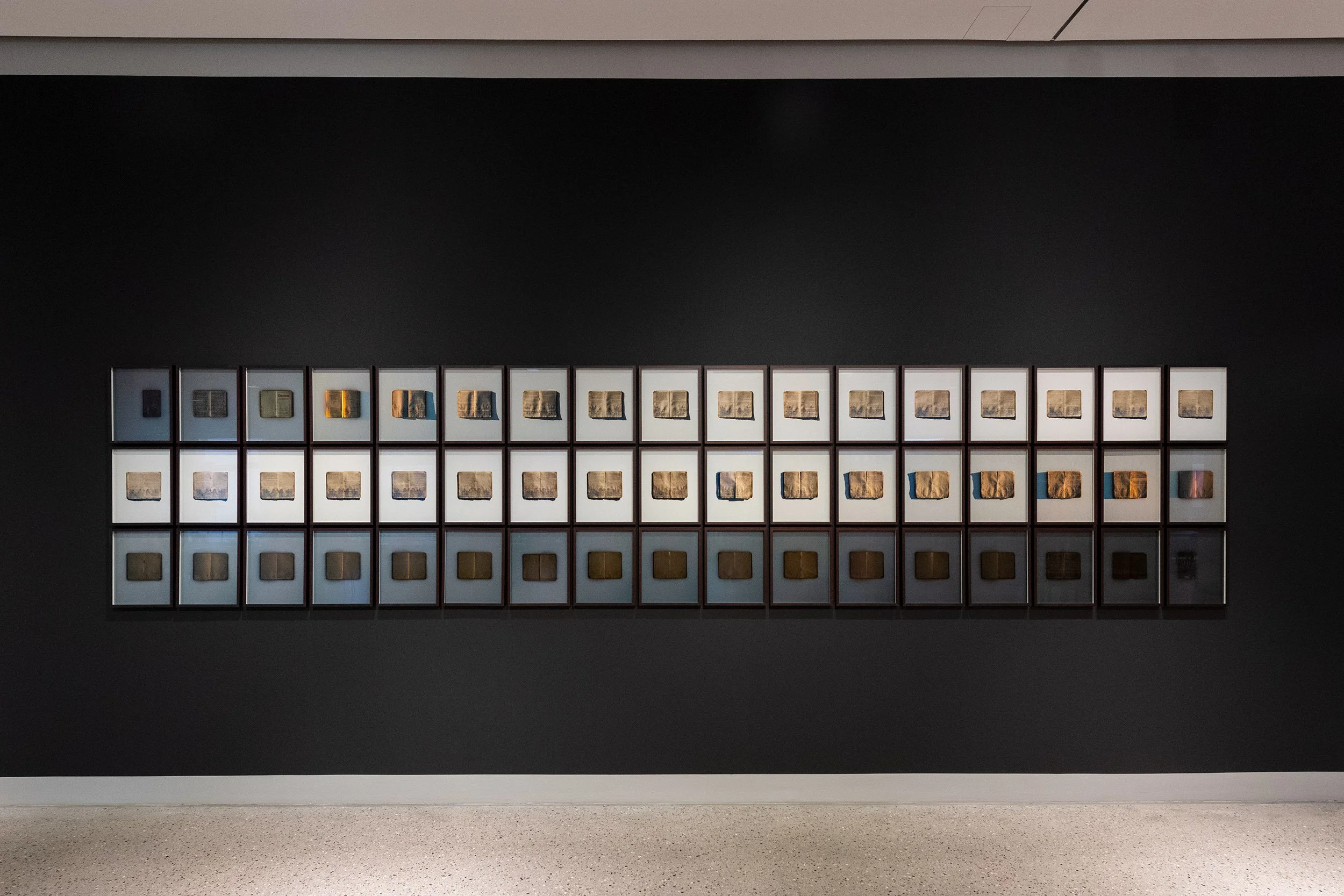
All 51 pages of the diary have been photographed in natural daylight, over the course of a single day, as the light shifted from morning to dusk. The sequence is presented as a typological series, each page given equal weight, each framed identically. The object remains at the centre. Time is made visible through light.
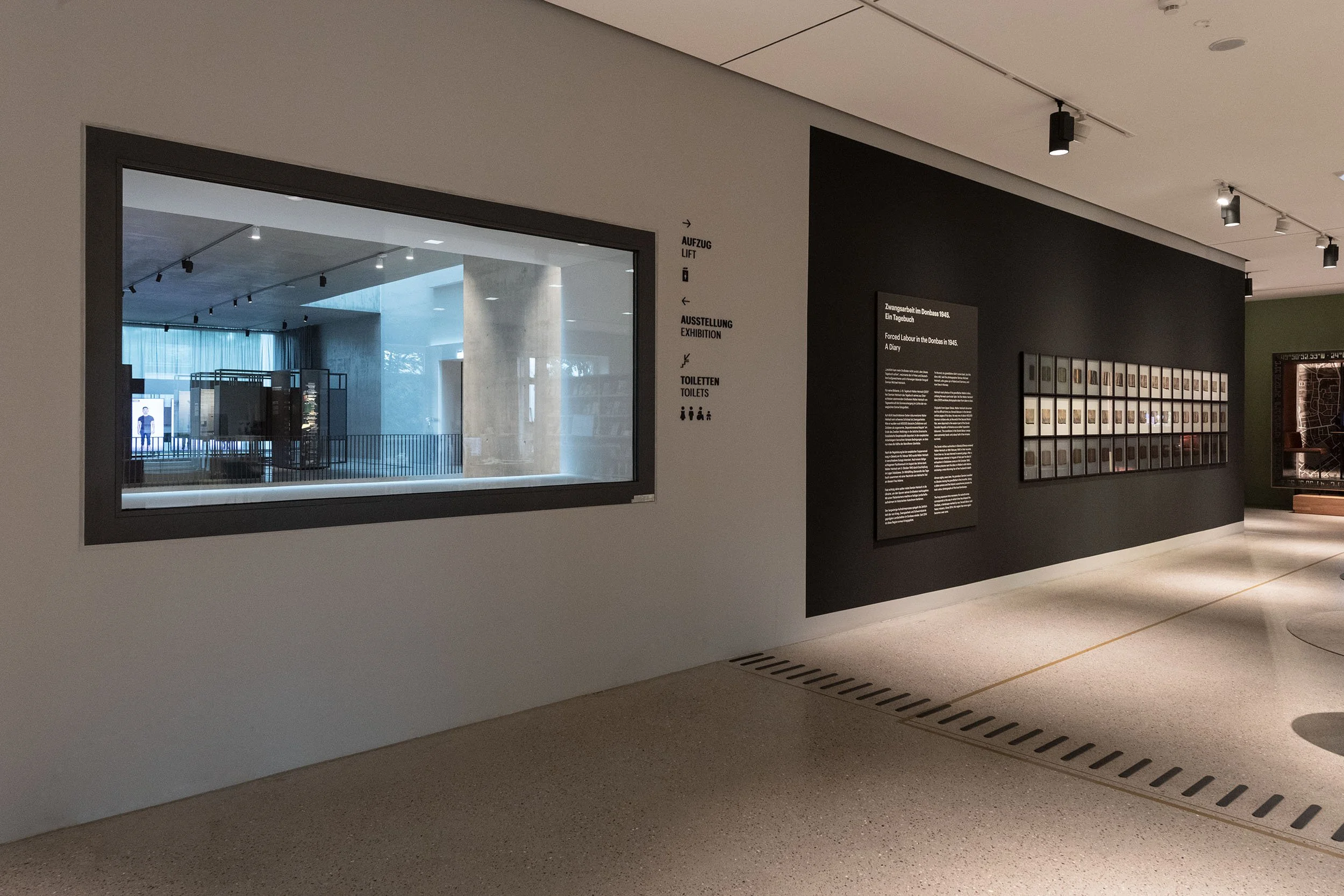
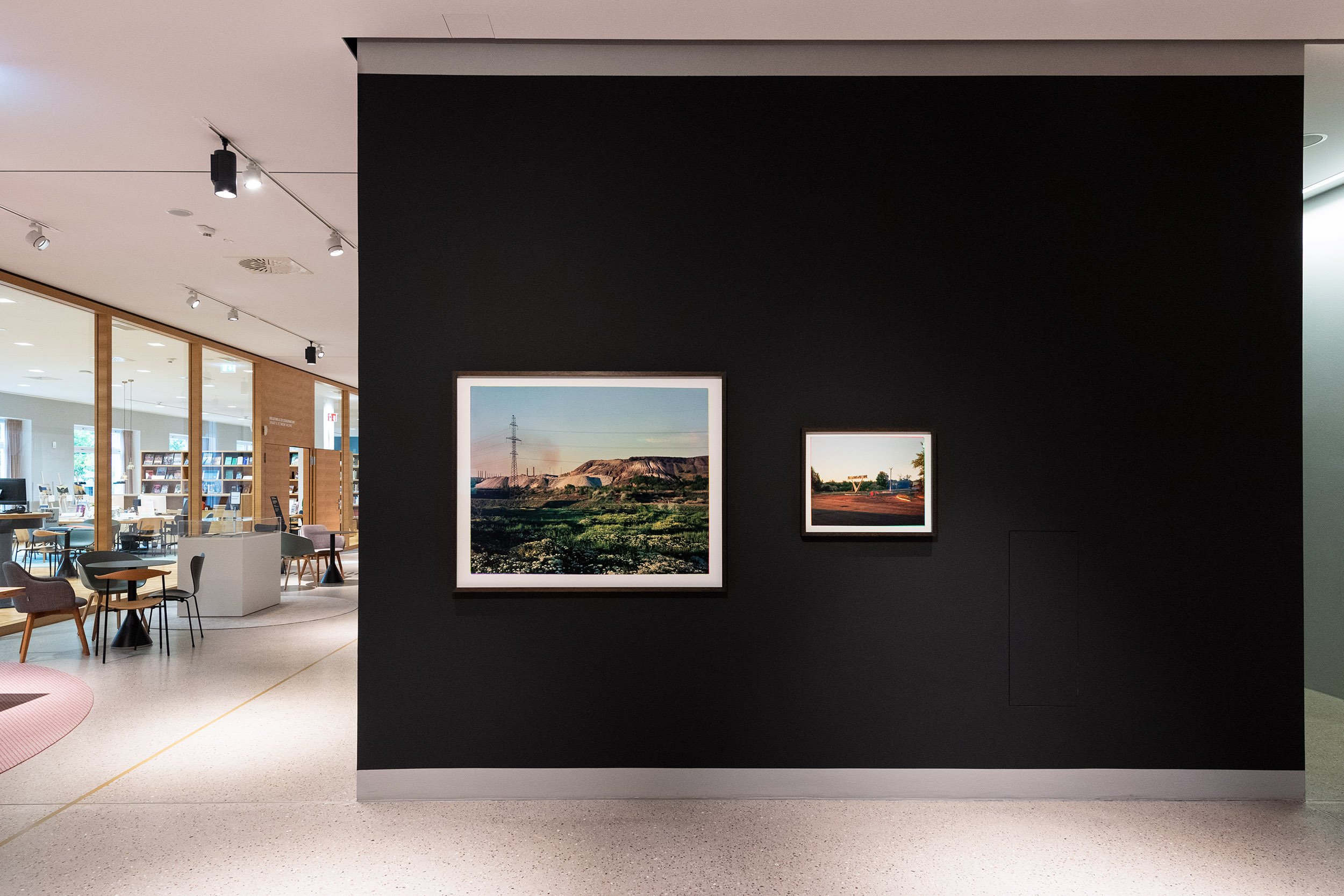
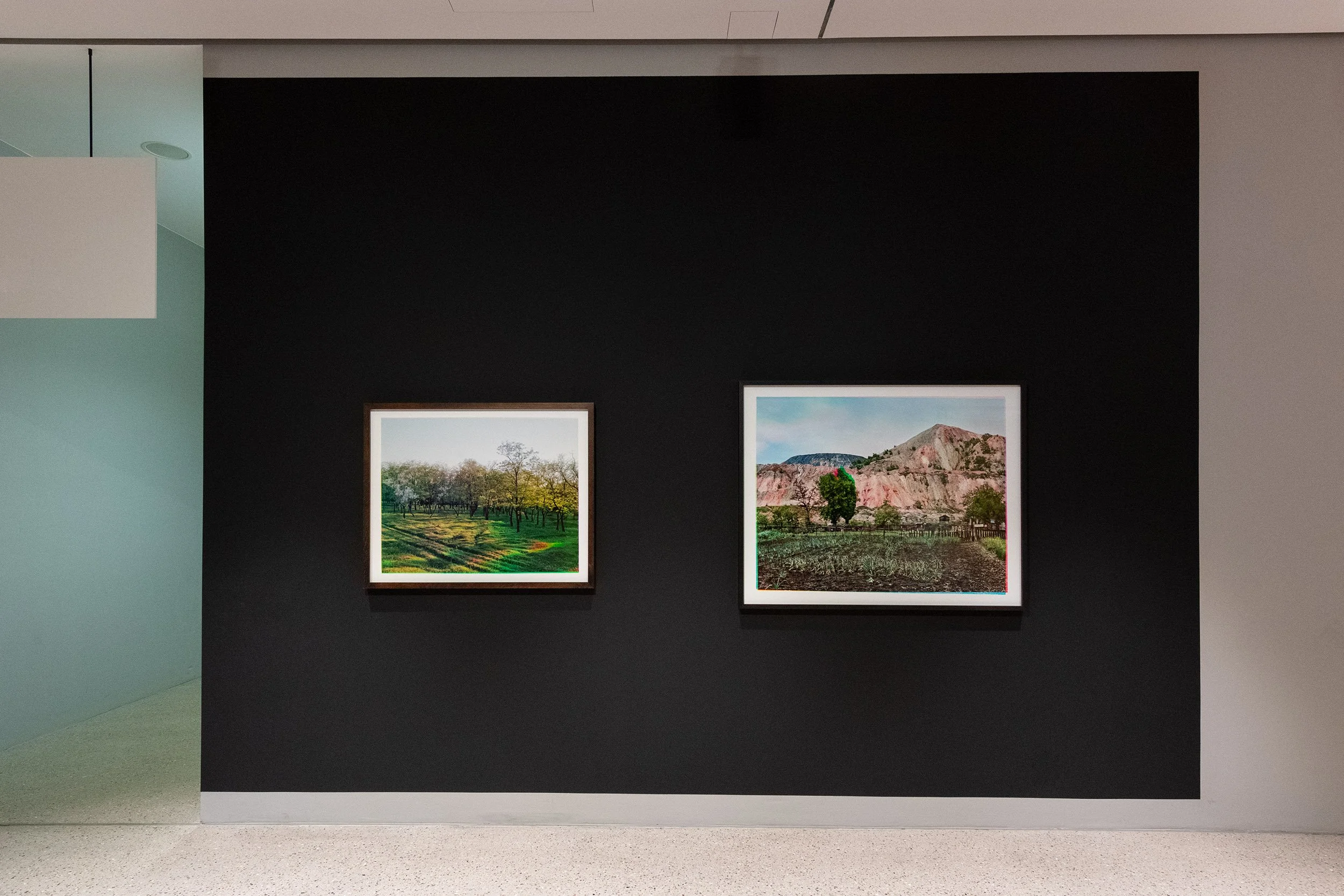
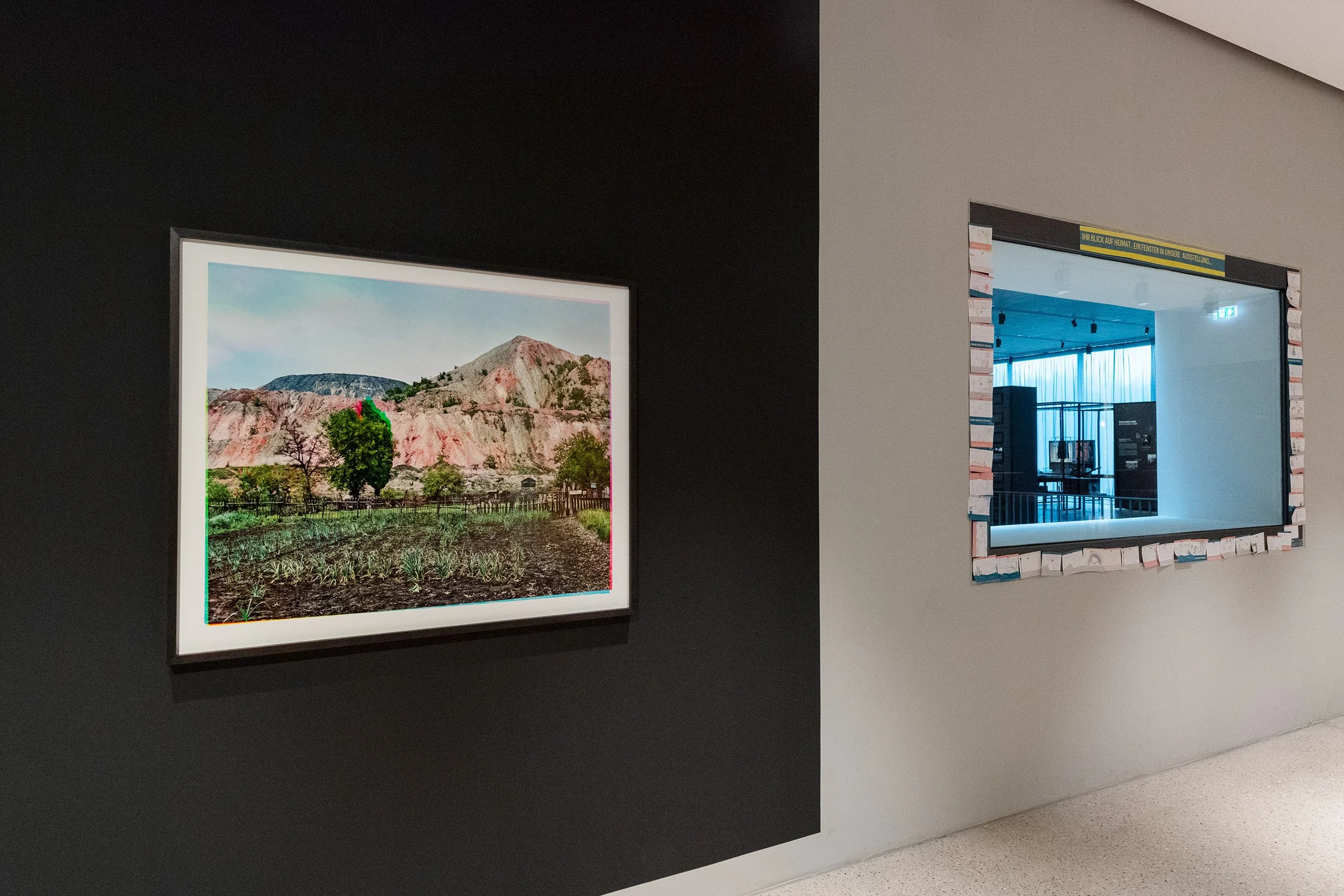
The installation has been publicly presented in Berlin at the Dokumentationszentrum Flucht, Vertreibung, Versöhnung from November 2024 to February 2025, accompanied by selected documents from Walter Heinisch’s belongings, the original diary, and a series of tricolor landscape works made in Ukraine in 2013.